
Why the best beef isn’t always the one you know
No balcão do açougue, é fácil se deixar guiar pelo que já é famoso: os cortes “de sempre” ficam em destaque, com cara de domingo e nome conhecido. Só que, muitas vezes, a melhor surpresa está fora do radar - em pedaços menores, meio estranhos à primeira vista, que quase não aparecem prontos na bandeja.
Enquanto a maioria dos supermercados empurra contrafilé, ancho e carne moída, muita gente do ramo vive apontando para músculos menos óbvios que entregam sabor de verdade por bem menos. Quase nunca vêm com etiqueta chamativa, mas são justamente esses que muitos açougueiros guardam para levar pra casa.
Em boa parte das lojas, o cliente entra pedindo os mesmos cortes: filé, alcatra, ancho, peito. Os nomes passam segurança. O formato é familiar. E o comércio responde destacando essas peças, deixando o resto para quem já sabe o que perguntar.
Só que, atrás do balcão, a história é outra. Cada animal tem quantidades minúsculas de certos músculos. Eles dão mais trabalho, não são tão “fotogênicos” e costumam ser difíceis de porcionar. Ainda assim, frequentemente acertam três coisas de uma vez: maciez, sabor intenso de carne e cozimento rápido.
Some of the most rewarding cuts of beef are small, oddly named and almost invisible in standard retail packs.
Butchers in France, the UK and the US all have their own nicknames for these pieces. They know exactly where they sit on the carcass and which customer might appreciate them. If you build a relationship with a local shop, you’ll often hear the same discreet line: “I’ve got something special out back if you’re interested…”
Spider steak: the delicate cut hiding near the hip
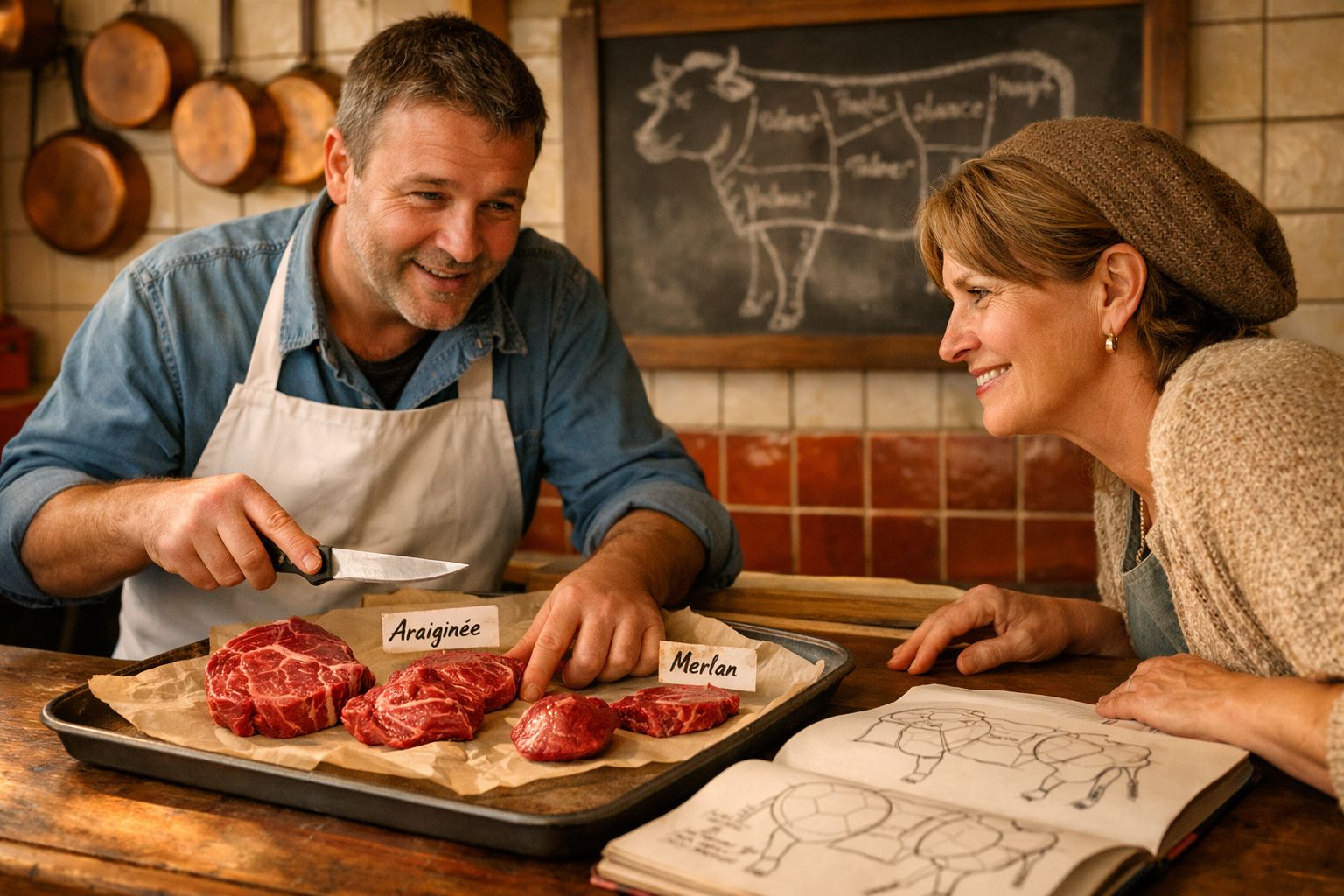
One of those “secret” cuts is what French butchers call l’araignée, known in English as the spider steak. Each animal only yields two of them. They sit deep near the hip bone, where the butcher has to work carefully around membranes and fat.
The name comes from the thin web of fat and fibres that run across the surface, giving it a slightly stringy, spider-like look. At first glance, it can appear a bit odd, especially when compared with a neat sirloin.
Esse visual acaba afastando muita gente. Mas quem confia no açougueiro costuma ser recompensado com uma carne macia e muito saborosa, com pouca gordura externa depois da limpeza.
How to cook spider steak at home
Spider steak behaves a lot like flank or bavette. It shines with fast, hot cooking and minimal fuss.
- Bring the meat to room temperature for 20–30 minutes.
- Pat dry and season simply with salt, pepper and maybe a touch of garlic.
- Heat a heavy pan until it’s properly hot, then add a little neutral oil.
- Sear the steak hard, about 1–2 minutes per side, depending on thickness.
- Rest it for at least 5 minutes, then slice against the grain.
Give the spider steak a quick, fierce sear and slice it thinly across the grain; that’s when its tenderness really shows.
Served rare to medium-rare, it delivers a juicy bite with a pronounced beef taste. It works brilliantly with simple sides: batata frita, salada verde, ou legumes de raiz assados.
The “false spider”: looks irregular, tastes impressive
Right next to the spider steak, around the same hip area, lies a neighbour cut sometimes dubbed the “false spider”. The muscle resembles the original but looks even less uniform, with more seams and folds.
Esse formato irregular faz com que muitos varejistas passem batido, já que ele não vira aqueles bifes “certinhos” e empilháveis na vitrine. Mas, depois de limpar e preparar, a maioria das pessoas teria dificuldade de diferenciar do par mais conhecido.
A recomendação dos açougueiros costuma ser parecida: fogo forte, pouco tempo e tempero sem exagero. Uma passada rápida numa frigideira de ferro ou na grelha (perfeito para um churrasco) realça o sabor e mantém o centro rosado.
The false spider is a perfect “weekday treat” cut: affordable, quick to cook, and surprisingly refined on the plate.
Why these cuts barely reach supermarket shelves
Quantity is the biggest obstacle. Where a carcass can deliver several kilos of mince or plenty of rump, tiny muscles like the spider or its “false” cousin appear only twice per animal. That makes packaging and marketing them on a large scale awkward.
Names also play a role. “Spider steak”, “poire”, “merlan”: they don’t instantly tell shoppers what to expect. Many people prefer a safe bet like “sirloin” over a mystery label that sounds like a fish or a fruit.
Poire and merlan: no, they’re not fruit or fish
Among French butchers, two other favourites are the poire and the merlan. Despite their names, they’re not a pear and certainly not whiting. Both sit towards the rear of the animal and are prized for their tenderness.
The poire usually weighs around 600 grams per animal, while the merlan comes in at around a kilo. That small size explains why they’re rarely piled high in chilled cabinets. Most of the time, they’re offered to customers who ask for “something tender, but not fillet prices”.
Cooked quickly in a pan or on a grill, they offer a texture close to more luxurious cuts. Because they’re less famous, they often cost noticeably less per kilo than premium steaks.
Poire and merlan show how naming and habit shape our shopping more than the actual quality of the meat.
How to talk to your butcher about hidden cuts
If you’re curious but unsure what to ask for, a short conversation can open plenty of options. Try lines such as:
- “Do you have any lesser-known steak cuts you’d recommend today?”
- “What do you personally like to take home from the beef?”
- “Is there a cut that’s great value but people don’t often request?”
Many butchers are happy to guide you, explain how to cook these pieces, and even trim them to suit your recipe. Some might suggest alternatives based on local cutting traditions, such as hanger steak, flat iron, oyster steak or Denver steak.
Price, taste and tenderness: how these cuts compare
| Cut | Typical amount per animal | Main qualities | Best cooking method |
|---|---|---|---|
| Spider steak (araignée) | 2 small pieces | Very tender, strong flavour | Fast sear, sliced thin |
| False spider | 2 small pieces | Tender, slightly irregular shape | High-heat pan or grill |
| Poire | Approx. 600 g total | Soft texture, lean | Quick pan-fry or grill |
| Merlan | Approx. 1 kg total | Balanced tenderness and flavour | Seared or sliced for stir-fries |
Prices vary by country and butcher, yet these cuts commonly sit below fillet and ribeye and closer to flank or bavette. For those willing to learn a new name and accept a less uniform shape, the value can be excellent.
Getting the best from quick-cook beef cuts
Because these muscles are naturally tender, they don’t need long cooking or complicated marinades. The real risk is overcooking them, which can turn a supple steak into something chewy.
A digital thermometer helps. For most steak-style cuts, you’re aiming around:
- 50–52°C (122–125°F) for rare
- 55–57°C (131–135°F) for medium-rare
- 60–63°C (140–145°F) for medium
Resting matters as much as the sear. Allow at least five minutes for a small steak, tented loosely with foil, so the juices can redistribute. Slicing against the grain is non-negotiable for these fibrous, flavour-packed muscles.
Understanding butchers’ terms and what they mean for you
Many of these names come from old butchery traditions, and they differ wildly between countries. A cut called araignée in France might be broken down differently in the US or UK and sold under another label, or even minced.
That’s where asking about the part of the animal helps. Terms like “from the hip”, “inside the leg” or “near the spine” give more clues than the marketing name alone. Butchers can usually point to a diagram or explain which mainstream cut it most resembles in cooking behaviour.
For home cooks, the key is not memorising every regional term, but learning a few principles: where tender muscles tend to sit, how connective tissue behaves with heat, and why some cuts favour speed while others need a slow braise.
Once you understand why a piece is tender or tough, you can work with almost any cut your butcher suggests.
Trying these lesser-known steaks can also be a practical, low-waste choice. Using small, neglected muscles means more of each animal is valued for what it can offer, rather than being automatically turned into mince. For households, that translates into new textures, deeper flavours and a wider range of simple weeknight meals built around beef that feels special without draining the budget.





Comentários
Ainda não há comentários. Seja o primeiro!
Deixar um comentário